
“I see women apologize for their bodies every single day,” Joy told me.
Joy Kent is a stylist at Macy’s in Northern California, but calling her a stylist almost understates what she actually does. For years, she has stood in fitting rooms with women of every shape, age, size, and life stage, helping them navigate one of the most emotionally loaded experiences in modern retail: getting dressed.
What struck me immediately about Joy wasn’t just her technical understanding of fit and proportion. It was the depth of empathy behind it. She has spent years observing something the fashion industry still largely refuses to acknowledge: most women do not hate shopping because they hate clothes. They hate shopping because the system keeps making them feel like something is wrong with their bodies.
“They’re not upset at Macy’s. They’re upset at their bodies. And there’s nothing wrong with their body. They just don’t know how to dress it.”
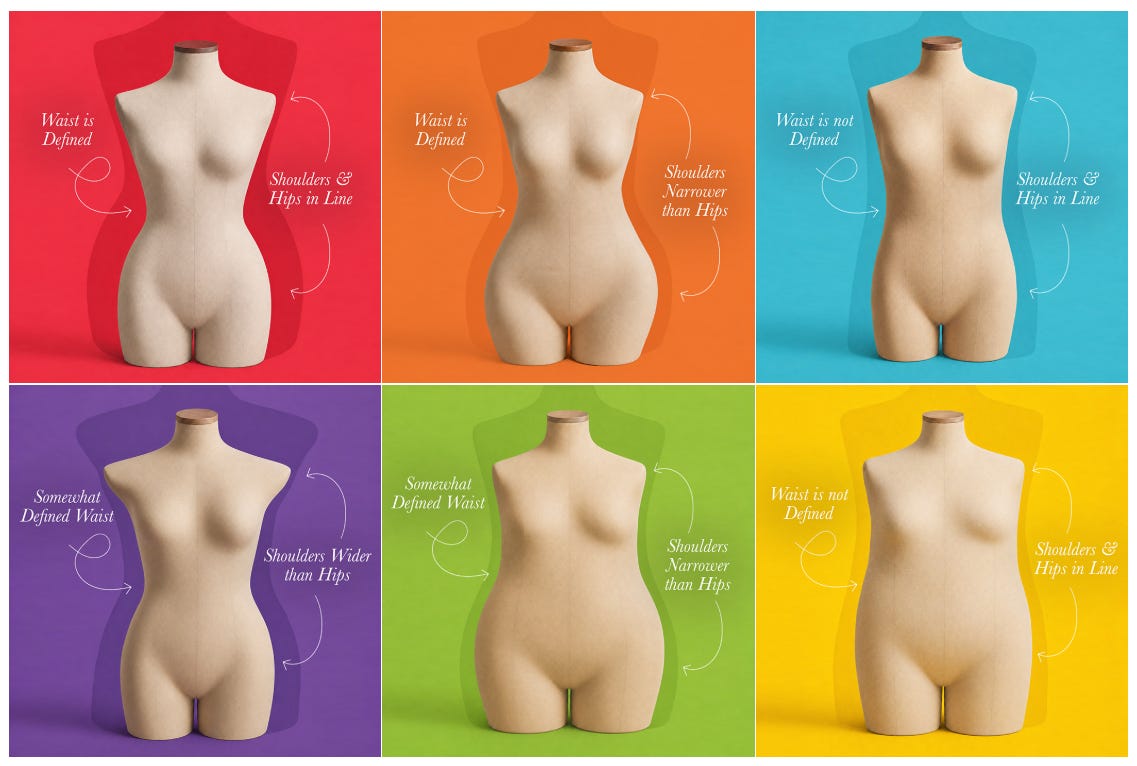
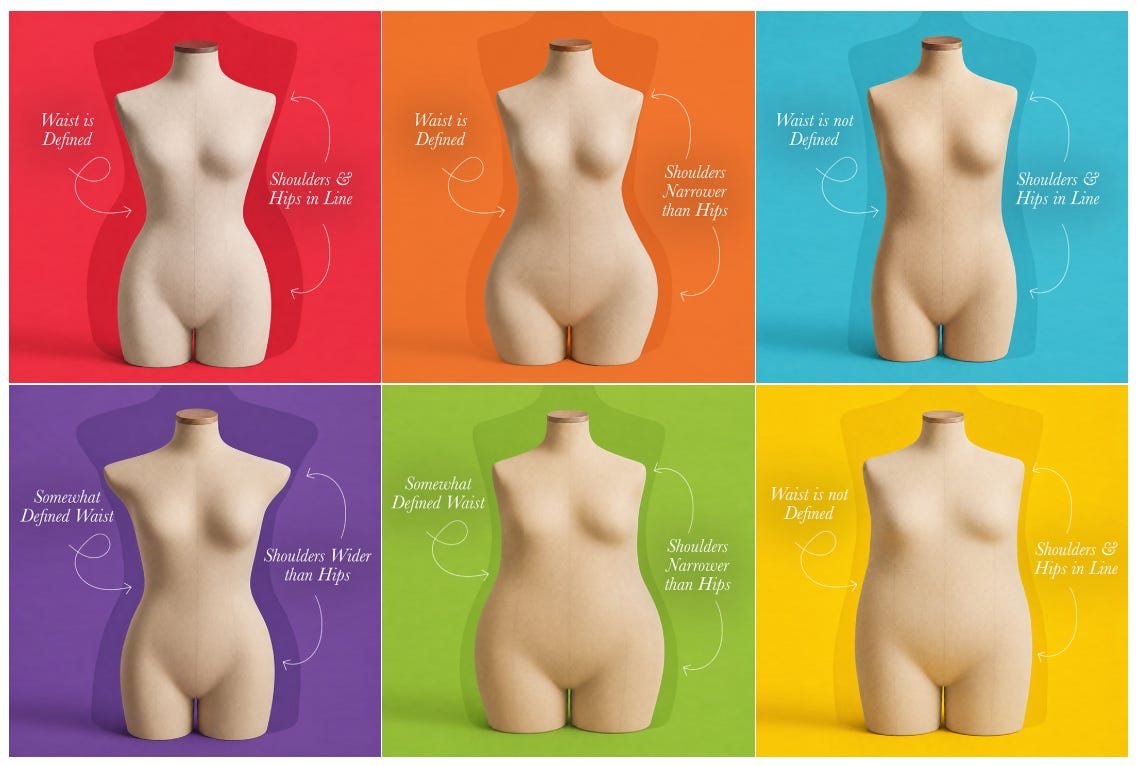
This is exactly the problem ShapeShopp by RevShopp was built to solve. We use the six color-coded body silhouettes above to steer customers toward a weekly curated catalog that flatters their shape — making the shopping experience more accurate, more successful, and a lot less overwhelming.
That sentence stayed with me because it perfectly captures the blind spot inside modern retail personalization. The fashion industry has spent the last decade building sophisticated systems that track clicks, browsing behavior, cart abandonment, influencer engagement, and purchase history. Retailers know what customers buy, when they buy it, and what they almost bought. Entire technology ecosystems have been built around understanding consumer behavior. And yet, despite all of that data, women are still ordering clothes online that don’t work on their bodies.
Not because online shopping is broken. Not because women are impossible to fit. And not because the technology doesn’t exist.
The real problem is that fashion retailers still do not understand the physical architecture of the customer herself.
The fire hose problem
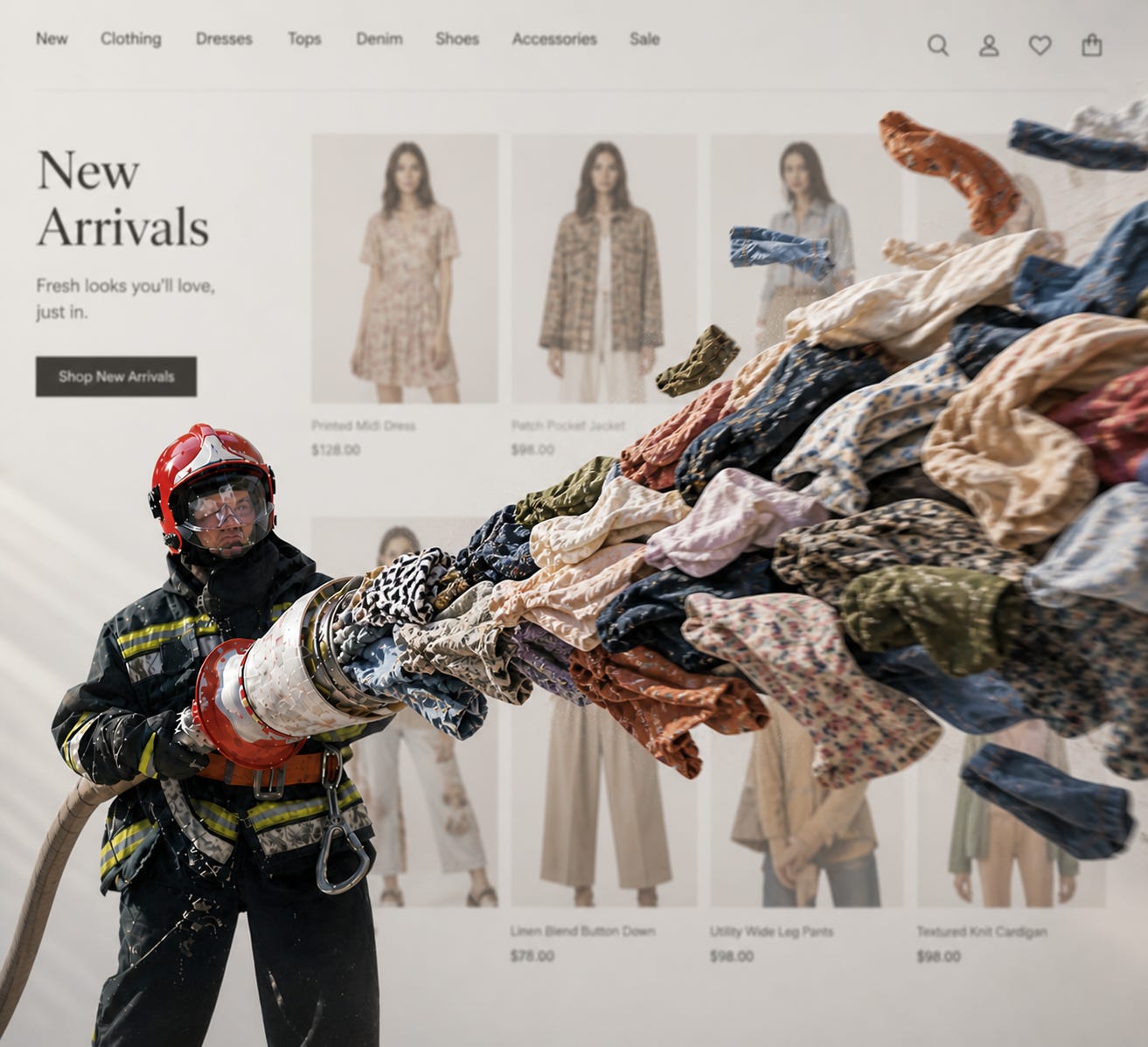
Today’s online shopping experience is essentially a fire hose of product. A woman lands on a retail site and is immediately shown best sellers, trends, influencer picks, and algorithmic recommendations. But almost none of those systems are asking the most important question: Will this actually work on her body?
Clothing is not consumed digitally. It is worn physically. A garment either harmonizes with a human body or it doesn’t. Yet most recommendation engines still operate as though all bodies are interchangeable. They are not.
Joy explained that over years of styling women, she began noticing patterns the industry overlooks. Certain silhouettes consistently empowered certain body structures. Certain horizontal lines disrupted visual balance. Some women instinctively felt better in angular jewelry, while others looked more harmonious in softer shapes. The clues were always there, hiding in plain sight.
“I don’t follow trends. I follow how people feel.”
That distinction matters more than the industry realizes. Because confidence changes purchasing behavior. Women buy differently when they feel understood. They return less when garments actually work on their bodies. They build trust with retailers who consistently show them products that create harmony instead of frustration.
And this is where the business case becomes impossible to ignore.
This isn’t a styling problem. It’s a merchandising problem.
Imagine a retailer discovers that 60% of the women shopping its site are pear-shaped, but only 30% of its inventory is highly compatible with pear-shaped bodies. That is not simply a styling issue. It is a merchandising disconnect. And it likely explains lower conversion rates, higher returns, abandoned carts, and excessive markdowns.
The industry currently treats returns like a logistics problem. But many apparel returns are actually a relevance problem. Women are being shown products that should never have been recommended to them in the first place.
The word that changes everything
At one point in our conversation, Joy said something that felt bigger than fashion itself.
“I want clothes that make women feel congruent on the inside and outside.”
Not trendy. Not aspirational. Congruent.
That may ultimately be the future of personalization. Not systems that simply predict what customers are likely to click, but systems that understand what is structurally likely to work. Not recommendation engines driven purely by popularity, but by compatibility.
The retailers who win the next era of fashion commerce will not simply know what their customers bought last season. They will understand how garments interact with real bodies, why certain silhouettes succeed, and how to reduce the friction between identity and clothing.
Because the future of personalization will not belong to retailers who know a customer’s browsing history. It will belong to retailers who understand her physical reality.
If this resonated, I’d love to hear what you think. Are you building in this space, working inside a retail organization wrestling with these questions, or just someone who’s felt this frustration firsthand? Leave a reply — I read every response.
And if you found this worth your time, the best thing you can do is share it with someone who needs to read it.
👋 If you’re new here — hi, I’m Amy.
Founder of RevShopp. I built Flattery Intelligence Tech™ — that figures out what actually flatters your body, not just your size.
Because a size 8 isn’t one thing. And online shopping should know that by now.
I post about fashion tech, fit, and fixing how we shop.
→ Follow for more. → Try ShapeShopp
RevShopp | Instagram | LinkedIn