
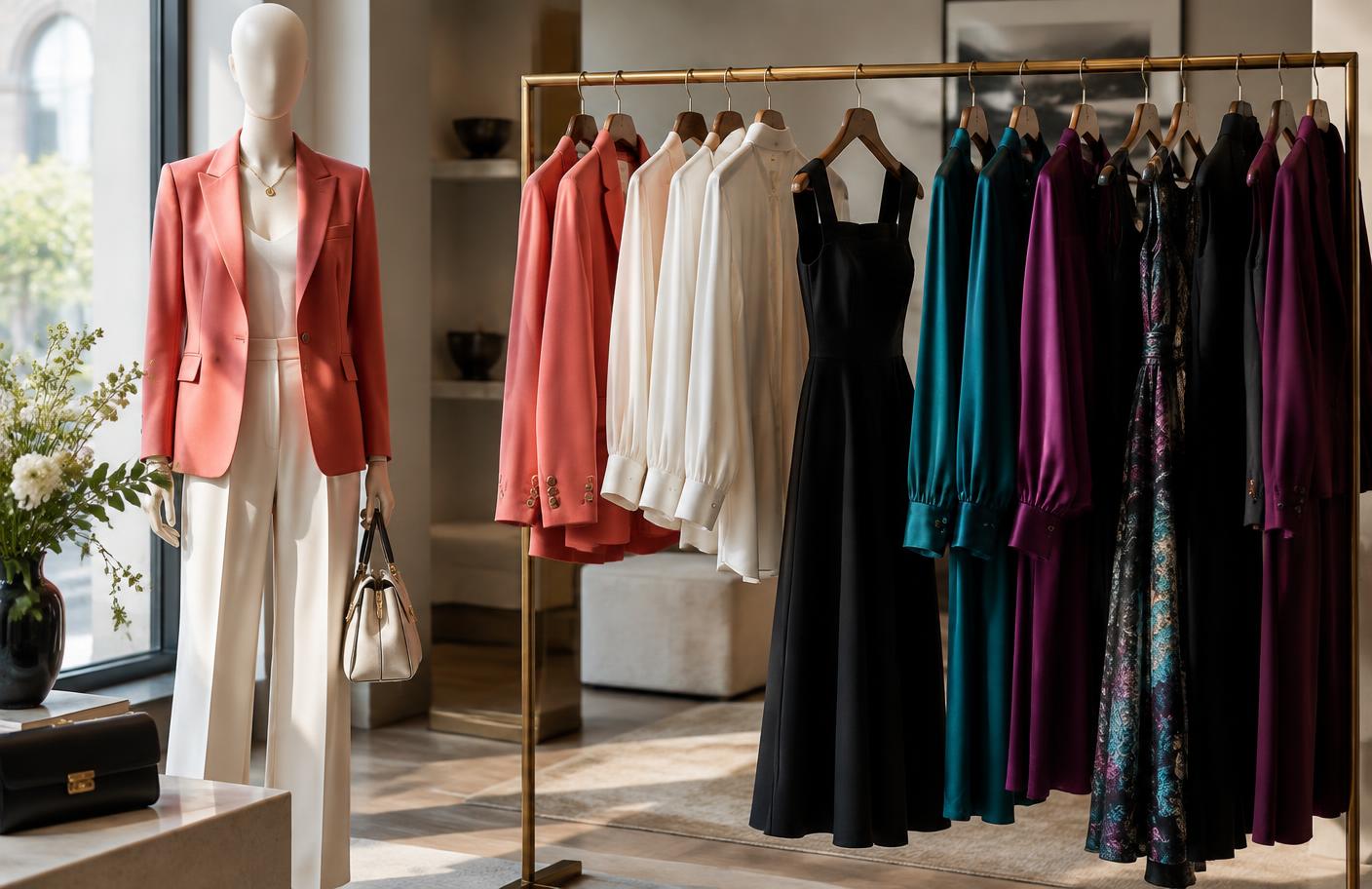
I recently caught up with my friend and fellow styling expert, Morgan Wider.
Whenever we get together, the conversation almost always drifts into retail. Not because we’re trying to analyze brands, but because between us we’ve spent decades studying the relationship between people and the clothes they choose.
Morgan is the creator of Identity Impact Index, a framework that helps people understand the relationship between their personality and their style preferences. She has an incredible ability to articulate why one person feels completely authentic in a tailored blazer while another comes alive in something far more expressive.
I hold the patent on recommending clothing to humans by shape. I built Flattery Intelligence Technology™ on top of it. Both exist because of one thing the industry keeps missing: women don’t shop as a size. They shop as humans. Humanizing e-commerce starts with understanding the person, not just the product.
Different expertise. Shared curiosity. As we talked, the conversation turned to brand identity. Not branding. Identity. The personality a retailer has spent years — sometimes decades — earning in the minds of its customers.
Some brands are unmistakably classic. Some are creative. Some are polished. Some are casual. Those identities aren’t accidents. They’re built over years of consistent merchandising decisions, and customers learn to trust them. A woman doesn’t return to her favorite retailer every season because every item is exactly the same. She returns because she knows who that brand is.
That led us to an observation both of us have believed for a long time. A retailer’s intuition about its own identity is usually right. The interesting question isn’t whether that intuition is correct. It’s whether there’s an easy way to confirm it.
So we decided to look.
We pulled up J.Crew’s website — not because this is about J.Crew specifically, but because it has one of the clearest and most recognizable identities in American retail. For decades, J.Crew has stood for a classic, polished aesthetic. That’s the trust they’ve built with their customer. If anyone’s intuition about their own identity should be reliable, it’s theirs.
Instead of looking at the homepage or the new arrivals, we went straight to the sale section, to the first product listing page, and started counting. Item by item, against one question: does this belong to the identity this brand has spent decades creating?
We weren’t evaluating fashion, we were asking ourselves whether we liked the garments. Or critiquing trends. (this last sentence doesn’t make sense now)
When we finished scanning page one of the sale section, eight of twenty-one items — nearly 40% of what we counted — didn’t match the classic identity J.Crew has spent years establishing. Bohemian prints. Backless cuts. Silhouettes that felt like they’d wandered in from a different brand’s site entirely.
Over the years, J.Crew has been fabulous at maintaining its identity, and it isn’t a knock on their merchants that some sale items still fell outside it. If anything, it confirmed something we already suspected: the sale section is one of the most honest, low-effort ways a brand can check its own instincts.
I couldn’t help but think about the thousands of women I’ve worked with over the years. One of the most common moments I witness happens just after someone puts on a garment she was excited to buy. The excitement disappears almost instantly. Instead of questioning the garment, she questions herself.
“Maybe it’s my body.”
Except it rarely is. Sometimes the garment doesn’t suit her shape. Sometimes it doesn’t suit her style identity. Sometimes it’s both.
Morgan and I simply study different sides of that same reality. Morgan helps people understand the style identity that feels authentic to them. I help retailers understand the shapes they’re designing for and build technology that connects the right garments to the right humans. When those two things align, confidence shows up almost immediately. When they don’t, trust begins to erode.
The more I thought about our conversation, the more I realized the same principle applies to brands. Customers don’t just trust a retailer because the quality is good. They trust a retailer because they know what to expect. That trust is one of the most valuable assets a merchant has, and most merchants already have strong instincts about protecting it.
Instead of asking whether the product was priced correctly, the trend arrived too late, or the weather cooperated, a merchant could glance at the same page we did and ask something simpler: does this still look like us?
Morgan and I approached that question from two different disciplines. She studies identity. I study shape. Together, we found ourselves looking at merchandising through a lens neither of us hears discussed very often.
Because in the end, customers don’t build relationships with products. They build relationships with brands that know exactly who they are.
And maybe the first page of your sale assortment is one of the most honest places in your entire business to see whether you’ve stayed true to that identity.
👋 If you’re new here — hi, I’m Amy.
Founder of RevShopp. I built Flattery Intelligence Tech™ — that figures out what actually flatters your body, not just your size.
Because a size 8 isn’t one thing. And online shopping should know that by now.
I post about fashion tech, fit, and fixing how we shop.
→ Follow for more. → Try ShapeShopp