
Ask anyone who has built an apparel intake form in the last decade what happens when you add a body shape question, and you will hear the same answer: shoppers stall. Completion drops. The data comes back thin and unreliable. So the question gets demoted from required to optional, and then quietly removed altogether. That is the received wisdom, and it is repeated confidently enough that most product teams now treat body shape as settled: a nice idea that shoppers reject.
We think the industry drew the wrong conclusion from a real result. Shoppers were not rejecting the question. They were rejecting the way they were being asked to answer it. Change the picture, and the same question becomes one of the highest-engagement moments in the entire shopping experience. We have the campaign data to show it.
Three ways the old picture fails
Nearly every body shape selector in the wild does at least one of the following. Each one is a small act of hostility toward the person being asked.
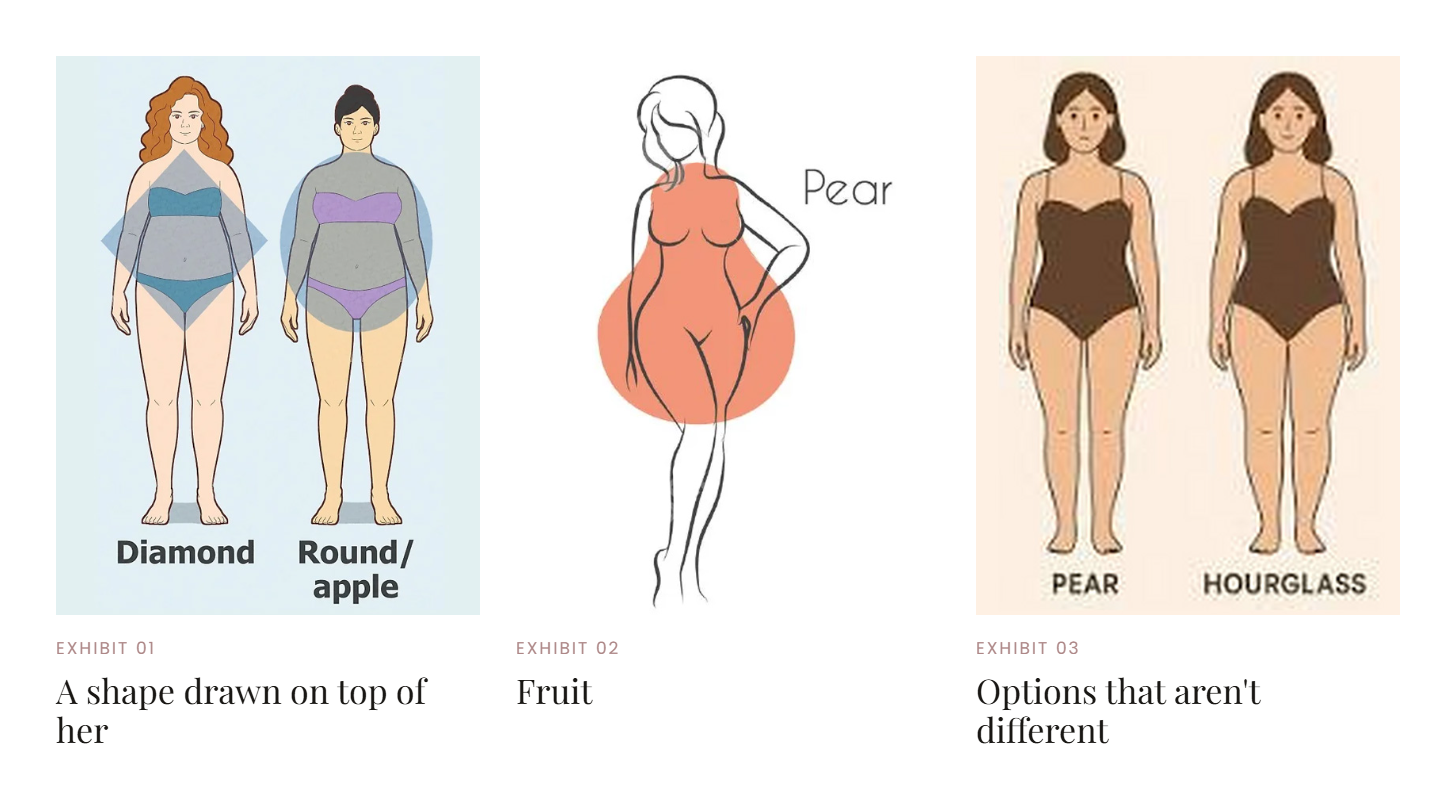
A shape drawn on top of her. The circle, the triangle, the hourglass. She is not choosing an option, she is agreeing to a verdict, and people do not click the thing they don't want to be.
Fruit. Pear, apple, banana. Charming in a magazine, insulting in a form. No shopper has ever felt served by being told which produce she resembles.
Options that aren't different. Renderings where the shoulders are not visibly wider than the hips. If a designer can't tell them apart, a shopper in a checkout flow certainly can't.
There is a well-understood principle underneath all three failures: recognition beats recall. A good selector shows only the one attribute you need the shopper to recognize. The moment you add a face, a hairstyle, a pose, a pair of shoes, she stops recognizing and starts searching — scanning the whole image for herself, failing to find herself, and concluding that none of the options apply. Detail does not make the choice easier. Detail makes her think, and thinking is where forms die.
Body shape went from a required question, to an optional one, to nonexistent. Not because shoppers hated it, but because the answer never changed the recommendation. There was nothing for the app to do with it.
— Philip Dubina, 15 years of fit usability testing
That second failure compounds the first. Shoppers are remarkably willing to answer personal questions when the payoff is obvious. Nobody objects to giving a bra size while bra shopping. Body shape gets a harder reception because the shopper cannot see what she gets in return. She is asked for a hard truth about herself and handed nothing. It is the same reason people bristle at being asked their age: not the question, the suspicion about what you'll do with it.
What we changed
Across more than four thousand women, we arrived at a form that removes every one of those failures. Torso only. No head, minimal arms and legs. No shape and no label placed over her body. One question, one tap. And immediately after: a catalog that is visibly, unmistakably hers.
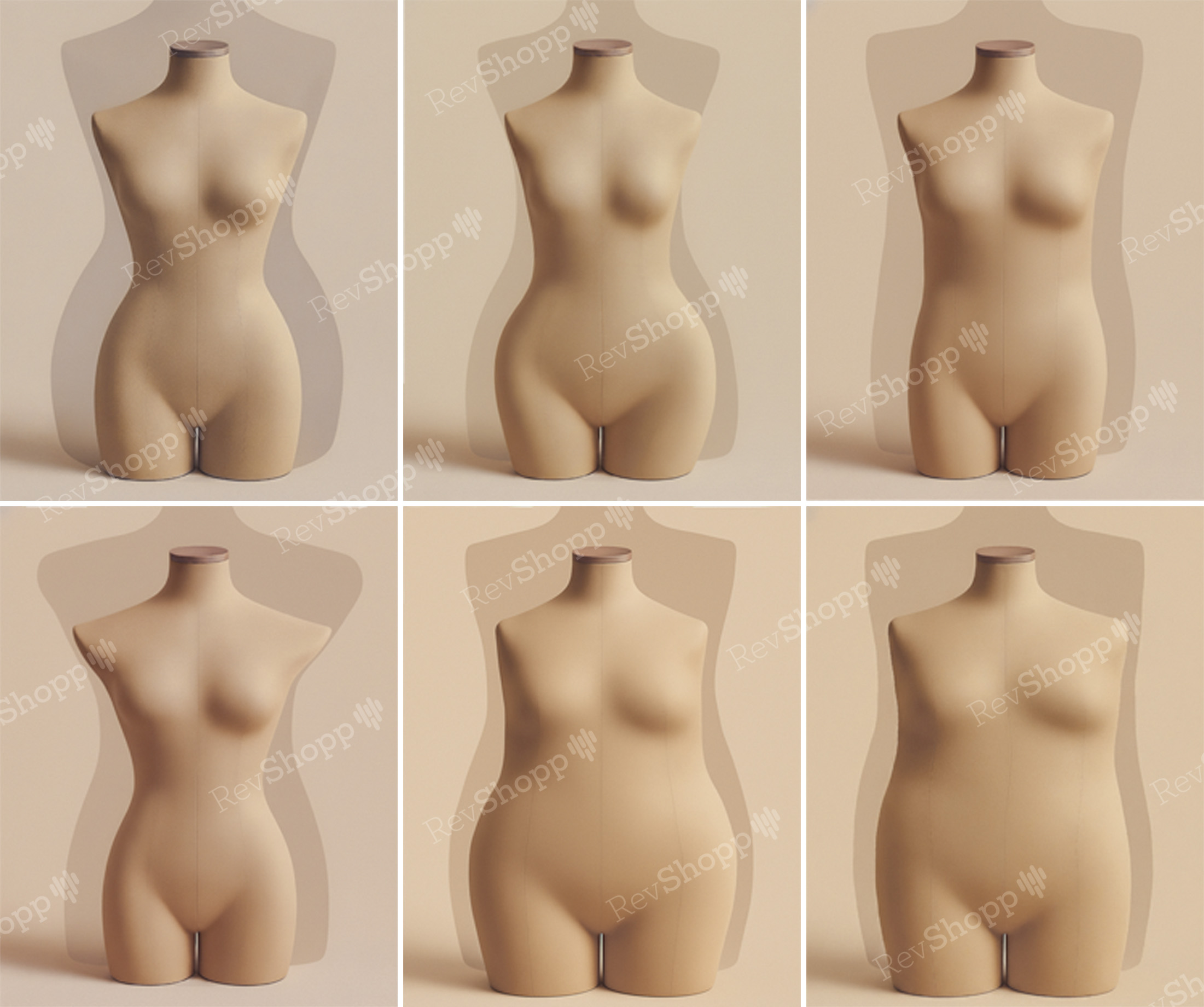
Framed this way, the shape step stops reading as a confession and starts reading as an unlock. Shoppers move through it. And then (this is the part that surprised even us) they behave differently for months afterward.
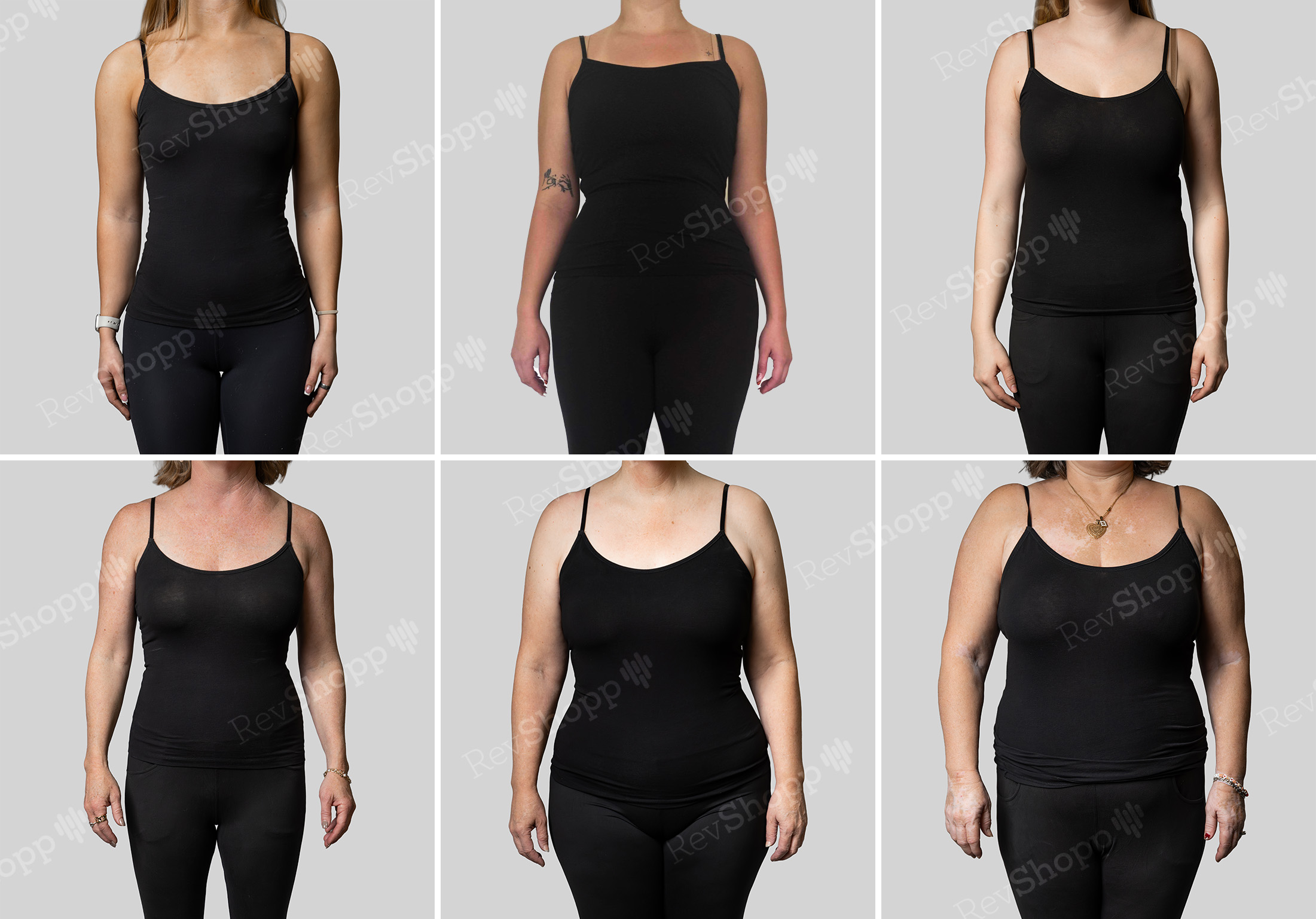
The numbers after she picks a shape
Every figure below is from live ShapeShop campaigns, measured against published apparel benchmarks. Each was sent to shoppers who had already chosen a shape — which is itself the first finding: these are people who had no trouble at all with the question.
Click to catalog
13%
of all recipients reached the curated catalog
SMS click through
10–24%
consistently in the teens, send after send
Email open rate
~50%
one in two; the weakest cohort still clears it
The consistency matters more than any single figure. Across four campaigns — barrel pants, summer travel, Americana classics, summer silhouettes — and across every shape cohort, the numbers barely move. One cohort opens at 35% on one campaign and 36% on the next. Another sits at 47–50% throughout. Cohorts do differ from each other in appetite, which is useful merchandising information on its own, but our weakest-performing cohort still lands at roughly industry average. The floor of a shape-curated program is the ceiling of an uncurated one.
If body shape were friction, engagement after the shape step would sit at or below baseline. Instead it runs roughly four times baseline, and it stays there. The industry didn't learn that asking about shape suppresses shopping. It learned that a bad picture suppresses answers.
The recommendation stands on what has been measured. Keep the shape question. Show her a torso, not a verdict. And then actually use the answer, because the fastest way to make a data point feel like friction is to collect it and do nothing with it at all.
Amy Wister and Philip Dubina lead product and experience at RevShopp. Between them they have spent more than twenty-five years running usability research on how shoppers describe their own bodies. All mannequin imagery is copyright RevShopp.