


Over the years, I’ve had the opportunity to talk with a number of publications about my journey building RevShopp. One of the conversations that resonated with me recently was with CanvasRebel, where we discussed the less glamorous — but very real — side of building a company.
Entrepreneurship stories often jump straight from the idea to the success. But the reality is that most of the journey happens in the middle: the years of uncertainty, rebuilding, setbacks, and persistence that rarely make it into headlines.
In this interview, I shared how RevShopp actually came to life — from my early days as a personal stylist helping everyday women shop for their body shapes, to wondering whether that intuition could be turned into software that helps shoppers online and reduces returns for retailers.
If you’re building something yourself, or just curious about how ideas slowly become companies, I hope parts of this story resonate.
Below is the conversation.
The Idea: Turning Stylist Intuition Into Technology
Q: Amy, thanks for taking the time to share your story with us today. Coming up with an idea is exciting, but the hard part is execution. Too often the media jumps from idea to success, skipping over the gritty details. How did you go from idea to building something real?
I was a professional personal stylist for real, everyday women who shopped at places like Macy’s, Kohl’s, Target, and Nordstrom. Over time, I developed a methodology that helped women shop based on their body type, and I licensed that methodology to stylists across the country.
The idea for RevShopp didn’t come from a boardroom — it came directly from the women I served.
For years, I kept hearing the same feedback:
“When I shop with you, everything works. But when I try to shop online by myself, it’s awful. I return so many things.”
After hearing that for almost a decade, I started asking myself whether shopping by shape could exist in software. Could stylist intuition actually live on a retailer’s website?
I didn’t know if it was technically possible, but the pain point was real — and no one seemed to be solving it.
That’s when I realized the idea was worth exploring.
The Pause Before the Startup
Q: What did the next phase look like after you had the idea?
In my case, it was years, not months.
My ability to pursue the idea paused for almost four years because I became a parent in a very unexpected way. I became involved in the foster care system and later, miraculously, gave birth to a biological child of our own.
During that time I continued working as a stylist and running my stylist network, but RevShopp stayed an idea.
Once our family life stabilized, I knew the first step was finding a technical partner.
So I surrounded myself with founders. I attended Founders Network events and began meeting technical founders.
At one event someone asked a simple question:
“What are you working on, and what do you need help with?”
I explained that I had a concept for software but needed someone who looked like an early-stage startup CTO to tell me whether it could even be built.
He immediately said: “I think I know someone you should talk to.”
Within a month I met Subbu, who later became my co-founder and CTO. That’s when the idea started becoming real.
Turning Human Knowledge Into Code
Q: Once you found your CTO, what did the next phase look like?
That phase took about a year.
Subbu essentially had to interview my brain and translate years of stylist knowledge into software logic.
We built things, broke them, rebuilt them, and broke them again because we didn’t always know how the stylist logic would translate into code.
At the time we didn’t have access to retailer product catalogs, so Subbu built bots that scraped retailer websites for product images and descriptions.
We used that data to test whether the system was making the right recommendations.
For example: should a V-neck top appear for a pear-shaped shopper?
Ironically, a few major retailers temporarily blocked us because the bots looked suspicious. But it was the only way to validate the technology before we had formal partnerships.

Protecting the Idea
Q: Did you protect the intellectual property before building the software?
Yes — we wrote the provisional patent before building the product.
The methodology had already been proven through years of real-world styling. The software was simply a way to scale that knowledge.
The patent covers the method of matching clothing to people based on body shape.
Protecting the IP was one of the very first things we did.
Amy’s Unconventional Path Into Fashion Tech
Q: Can you tell readers a little about your background?
My path wasn’t traditional.
I started my career in IT at Intel even though I didn’t have an engineering background. Later I worked in sales for a large manufacturing company.
Eventually I developed my body-shape shopping methodology, became a stylist, and trained stylists across the country.
Interestingly, my relationship with fashion started much earlier. In high school I worked retail at The Limited.
At the time I didn’t realize it, but I was subconsciously pattern-matching clothing and human shapes on the sales floor.
That experience ended up being foundational to everything that followed.
The Problem RevShopp Solves
Q: What problems does RevShopp solve for clients?
We solve two big problems.
For consumers, we solve the confidence problem. We help shoppers find clothing that doesn’t just fit — it actually flatters their figure.
Fit and flattery are not the same thing, and that’s where most online shopping fails.
For retailers, we solve a margin problem caused by returns.
When shoppers buy items that don’t flatter them, they return them.
Our software acts like an in-store stylist online, guiding shoppers toward better choices. That reduces returns, improves conversion, increases loyalty, and creates a better experience.
What Makes RevShopp Different
Q: What sets your product apart from others in the market?
We sit in a white space between size recommendation tools and outfit styling tools.
Tools like True Fit help shoppers find the right size. Other tools help assemble outfits.
But neither answers the question shoppers are really asking:
“Will this actually look good on me?”
RevShopp is designed to predict flattery.
Virtual try-on tools might show fit or styling, but they don’t evaluate how a garment works with a real human body shape. That’s our focus.

The Hardest Moment
Q: Can you share a story that illustrates your resilience?
Resilience for me has meant simply not giving up.
At one point my family set a deadline: if there wasn’t meaningful traction by the end of the fiscal year — around 2019 or 2020 — we would shut the company down.
The hardest moments were almost always tied to raising capital.
As a female founder, I was navigating an ecosystem where women receive a very small percentage of venture funding.
One of the most painful moments came when I had a major investor group ready to invest.
During a final call, someone who hadn’t participated in the diligence process joined and raised several misinformed objections.
I watched $500,000 of funding disappear in real time.
I spent three days in bed crying — exhausted and overwhelmed.
What got me moving again was an angel investor who came to my house and helped me whiteboard ways to keep going.
That’s what resilience has looked like for me.
And I know it won’t ever really end.
The Best Source of Early Customers
Q: What’s worked best for finding new clients?
Without question: my network.
In B2B, you usually don’t win your first clients through cold outreach.
Instead, opportunities come through trusted introductions and relationships built over time.
Being a strong connector — or having someone on your team who excels at relationship-building — is a huge advantage.
When you’re an early-stage founder, you have to lean on the relationships you’ve built over years.
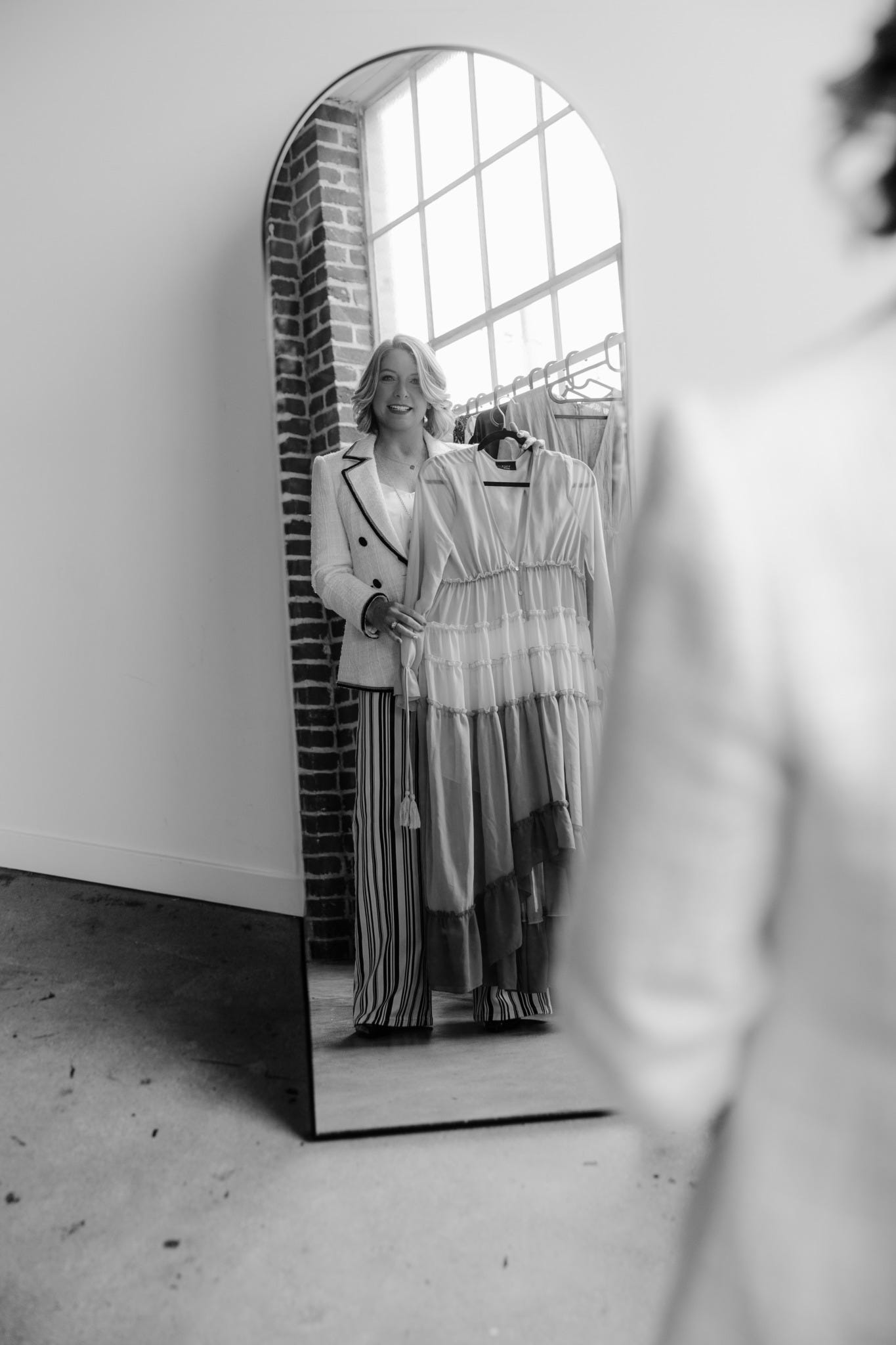
👋 If you’re new here — hi, I’m Amy.
Founder of ShapeShopp. I built Flattery Intelligence Tech™ — that figures out what actually flatters your body, not just your size.
Because a size 8 isn’t one thing. And online shopping should know that by now.
I post about fashion tech, fit, and fixing how we shop.
→ Follow for more. → Try ShapeShopp
My IG
LinkedIn
Image Credit: Ryan Greenleaf